
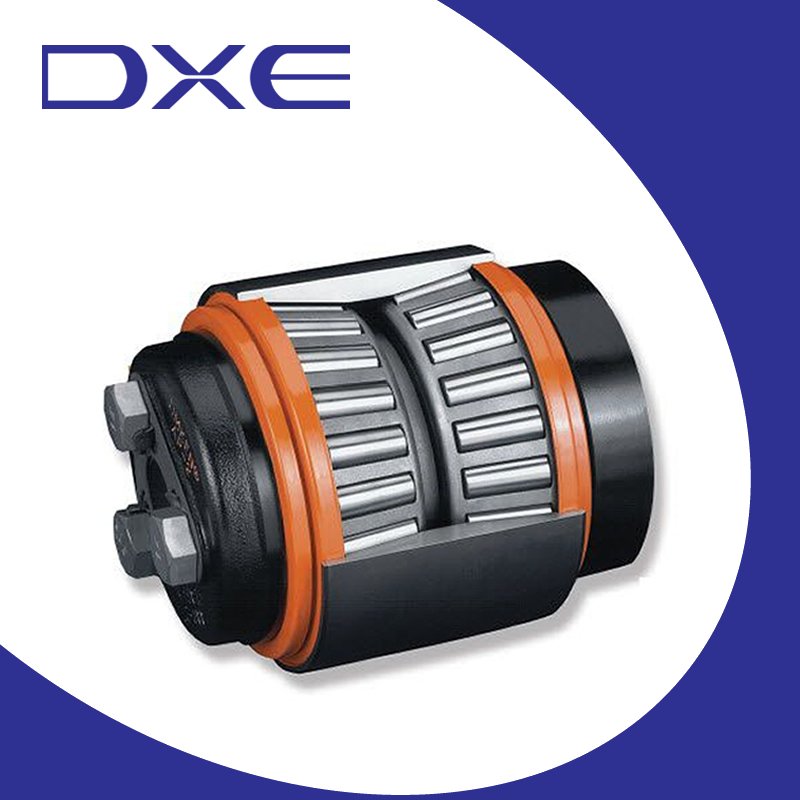
DXE railway bearing company here writes common faults of bearings and how to eliminate them
1. Bearing temperature is too high
When the mechanism is running, the position where the bearing is installed is allowed to have a certain temperature. When you touch the mechanism shell with your hands, it is normal if you don’t feel hot. Otherwise, it indicates that the bearing temperature is too high.
The reasons for the high temperature of the bearing are: the quality of the lubricating oil does not meet the requirements or deteriorates, the viscosity of the lubricating oil is too high; the mechanism assembly is too tight (insufficient clearance); the bearing assembly is too tight; Large; broken bearing cage or rolling elements, etc.
2. Bearing noise
Rolling bearings are allowed to have a slight running sound during work. If the sound is too loud or there is abnormal noise or impact, it indicates that the bearing is faulty.
The reasons for the noise of rolling bearings are more complicated. One is the wear of the mating surfaces of the inner and outer rings of the bearing. Due to this kind of wear, the matching relationship between the bearing and the housing, and the bearing and the shaft is destroyed, causing the axis to deviate from the correct position, and abnormal noise is generated when the shaft moves at high speed. When the bearing is fatigued, the metal on its surface will peel off, which will also increase the radial clearance of the bearing and produce abnormal noise. In addition, insufficient bearing lubrication, dry friction, and broken bearings will all produce abnormal sounds. After the bearing is worn and loose, the cage is loose and damaged, which will also cause abnormal noise and damage to the bearing.